


Ribeye comes from the rib section of the animal, between the shoulder and the loin. This steak is cut without the bone.


RIBEYE AT A GLANCE
A steak people know
A steak people know
by name.
The details are worth
knowing, too.
A clear look at the cut, the package, how to cook it, and what makes ribeye different from other steaks.


Each frozen package contains one boneless ribeye steak. Individual steak weights vary, so choose from the available package sizes above.
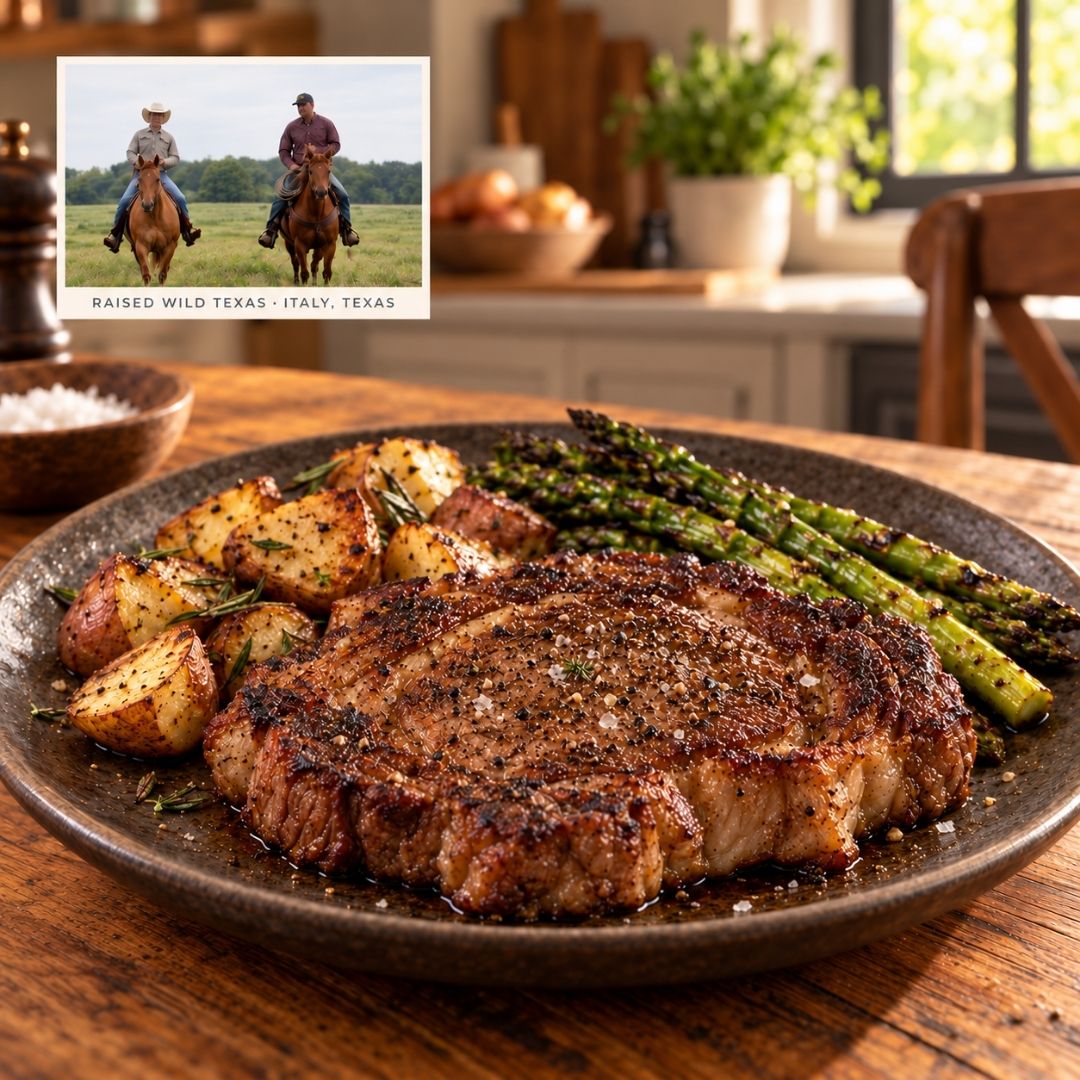
Ribeye handles high heat well. Grill it or sear it in a hot skillet, manage flare-ups as the fat renders, and let the steak rest before serving.
Grilling, cast-iron searing, skillet-to-oven cooking, and simple preparations that let the beef and its natural marbling carry the meal.
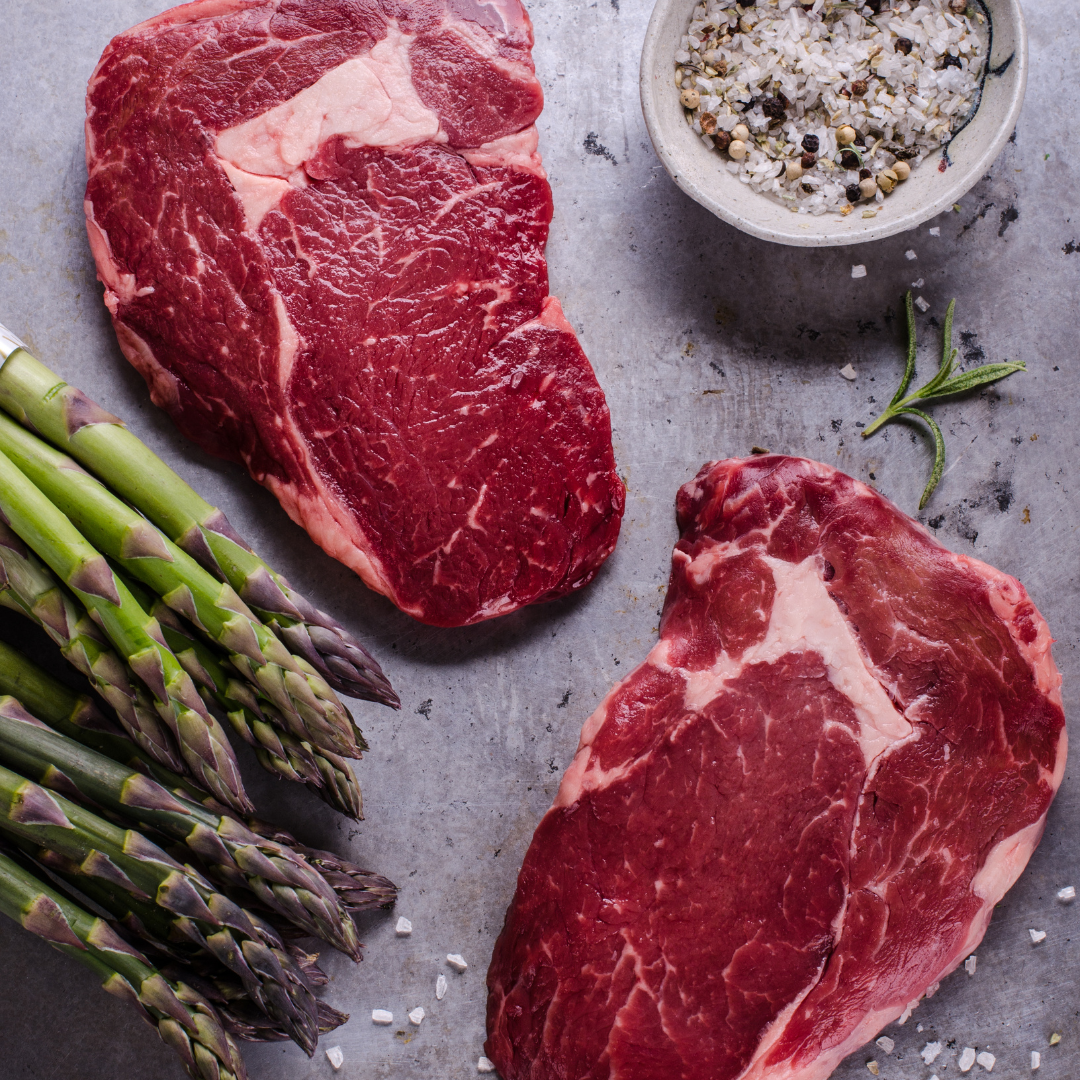
Ribeye carries fat through the muscle, not only around it.
Marbling is not decoration. It is part of how ribeye cooks.
Ribeye comes from the rib primal.
This section sits under the front portion of the backbone and yields steaks suited to fast, dry heat.
Fat runs through the steak.
Visible intramuscular fat is part of what distinguishes ribeye from leaner steaks such as filet or round.
Fat changes the way the steak meets heat.
On a grill, rendering fat can cause flare-ups. In a skillet, it helps baste the steak as it cooks.
NEXT: THE RANCH
To understand the people carrying the responsibility behind this beef, start with Raised Wild Texas.

RAISED WILD TEXAS · ITALY, TEXAS
THE RANCH BEHIND THE BEEF
Three to four years
means a lot of seasons.
Raising cattle over that length of time means committing land, water, forage, attention, and daily work long before the animal reaches maturity.
Conditions do not stay the same for three or four years. Rain changes what grows. Heat changes water needs. Seasons change the pasture. The cattle keep growing through all of it, so the ranch has to keep responding.
THE WORK BEHIND IT
Someone has to
make the call.
Water has to be watched. Forage has to be managed. Cattle have to be observed and moved. The health of the herd has to be tended to.
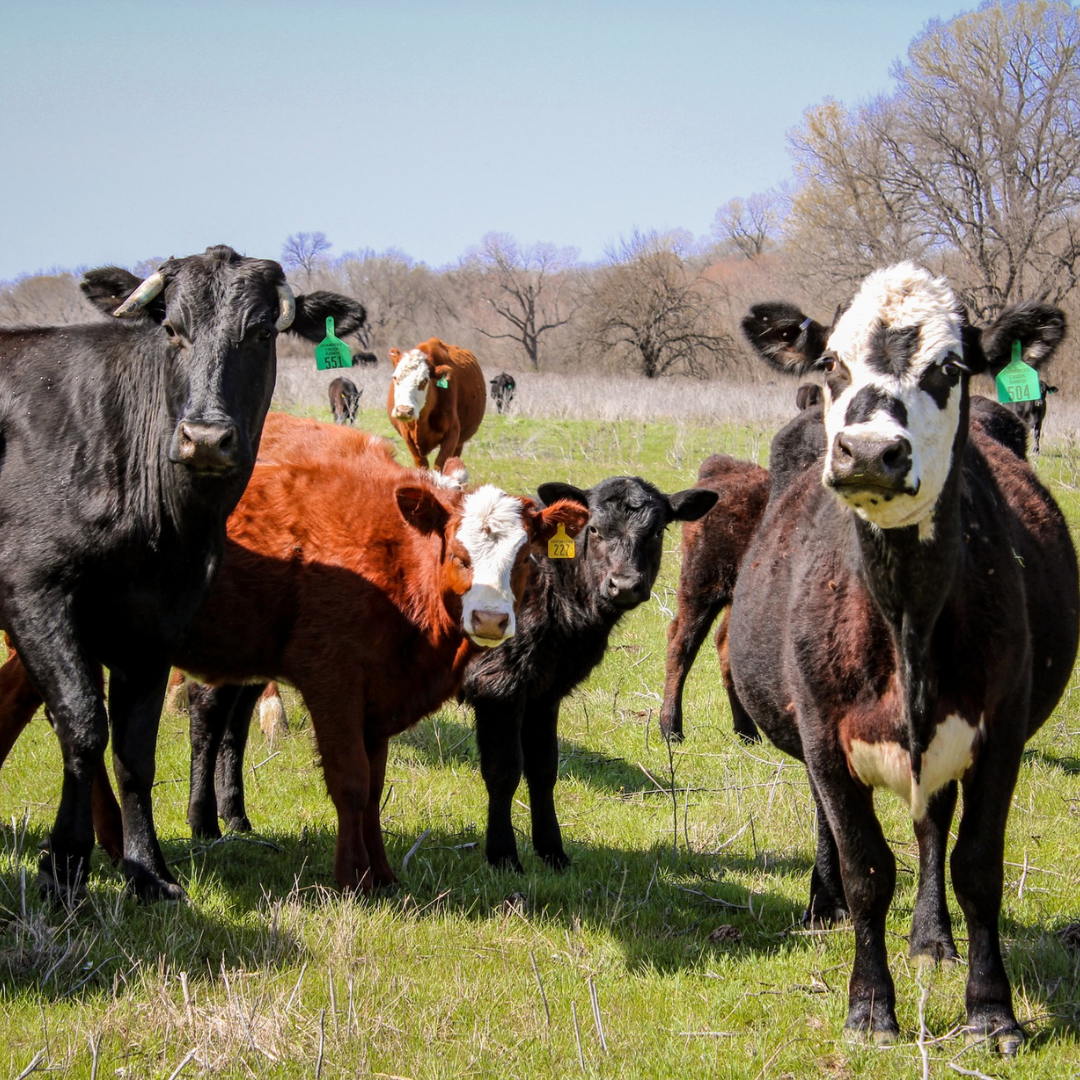
Raised Wild keeps its cattle on grass and other forage, with water, from beginning to end rather than switching them to grain for finishing. Standards on a label are easy to list. Living them out for three or four years is the work.
01
100%
GRASS-FED + GRASS-FINISHED
02
3–4
YEARS TO MATURE
03
~8
WILD ACRES PER ANIMAL
04
200+
GRASSES + FORAGE
01
03
THE RANCH BEHIND THE BEEF
Three to four years means a lot of seasons.
Raising cattle over that length of time means committing land, water, forage, attention, and daily work long before the animal reaches maturity.
Conditions do not stay the same for three or four years. Rain changes what grows. Heat changes water needs. Seasons change the pasture. The cattle keep growing through all of it, so the ranch has to keep responding.
THE WORK BEHIND IT
Someone has to make the call.
Water has to be watched. Forage has to be managed. Cattle have to be observed and moved. The health of the herd has to be tended to.
Raised Wild keeps its cattle on grass and other forage, with water, from beginning to end rather than switching them to grain for finishing. Standards on a label are easy to list. Living them out for three or four years is the work.
01
100%
Grass-fed + grass-finished
02
3–4
Years to mature
03
~8
Wild acres per animal
04
200+
Grasses + forage

MEET THE PEOPLE BEHIND THE BEEF
Raised Wild Texas
Before the product, there was a person.
Barron Kidd and Ricky Langer are the people ROCK works with at Raised Wild Texas.
When we have a question about the herd, the pasture, or how the cattle are being raised, we know who to ask. Knowing the people behind the food gives the standards on the package a person responsible for the work.
HOW THIS BEEF IS RAISED
100% grass-fed & grass-finished · grass + other forage + water · no grain · closed herd · no antibiotics · no vaccines · no added hormones
Know the rancher.
Honor the food.
Gather the family.
QUESTIONS FROM THE TABLE
Boneless Ribeye Steak,
answered.
What matters is understanding the product, how to use it, and who was responsible for the cattle behind it.
BEFORE YOU ORDER0108
01What cut is ribeye?
02What is marbling?
03How should I cook ribeye?
04Is this ribeye bone-in?
05How large is each steak?
06How are Raised Wild Texas cattle raised?
07Who is behind Raised Wild Texas?
08How do I receive this product from ROCK?
READY TO CHOOSE YOUR PACKAGE?
Choose the available weight or quantity that fits your household.
THE ANSWER01 / 08
THE PRODUCT
What cut is ribeye?
Ribeye is a steak from the rib primal.
THE PRODUCT
What is marbling?
Marbling is the visible intramuscular fat distributed through the steak.
IN THE KITCHEN
How should I cook ribeye?
Grill or sear it over high heat, manage the rendered fat, and rest before serving.
IN THE KITCHEN
Is this ribeye bone-in?
No. The current ROCK product is a boneless ribeye.
PRACTICAL DETAILS
How large is each steak?
Current Shopify options run approximately 0.8 to 1.1 lb.
THE CATTLE
How are Raised Wild Texas cattle raised?
Raised Wild Texas cattle are 100% grass-fed and grass-finished on grass and other forage, with water, from beginning to end. ROCK’s current canonical source states no grain, antibiotics, vaccines, or added hormones.
THE PEOPLE
Who is behind Raised Wild Texas?
ROCK works with Barron Kidd and Aaron Langer at Raised Wild Texas in Italy, Texas. The ranch was established in 1961 and is now in its third generation.
RECEIVING YOUR ORDER
How do I receive this product from ROCK?
Order during the current ROCK cycle and receive it through scheduled Dallas–Fort Worth local pickup or home delivery, according to the options shown on the store.
READY TO CHOOSE YOUR PACKAGE?
Select the current available weight or quantity above.
FOR THE TABLE
A good ribeye
A good ribeye
doesn’t need much.
Ribeye is a cut people often save for a particular meal. But cooking it does not have to be complicated.
A hot grill or skillet. Salt. Enough attention not to overcook it. A few minutes to rest before slicing.
Then it goes where the work behind the beef was always headed: the table.